Contact Form

Name

Email *

Message *

Translate

Thursday, February 3, 2011

Prepare Home for Snow and Cold Weather


Add the following supplies to your disaster supplies kit:
1. Rock salt to melt ice on walkways
2. Sand to improve traction
3. Snow shovels and other snow removal equipment.

Prepare your home and family
1. Prepare for possible isolation in your home by having sufficient heating fuel; regular fuel sources may be cut off. For example, store a good supply of dry, seasoned wood for your fireplace or wood-burning stove.

2. Winterize your home to extend the life of your fuel supply by insulating walls and attics, caulking and weather-stripping doors and windows, and installing storm windows or covering windows with plastic.

3. Winterize your house, barn, shed or any other structure that may provide shelter for your family, neighbors, livestock or equipment. Clear rain gutters; repair roof leaks and cut away tree branches that could fall on a house or other structure during a storm.

3. Insulate pipes with insulation or newspapers and plastic and allow faucets to drip a little during cold weather to avoid freezing.

4. Keep fire extinguishers on hand, and make sure everyone in your house knows how to use them. House fires pose an additional risk, as more people turn to alternate heating sources without taking the necessary safety precautions.

5. Learn how to shut off water valves (in case a pipe bursts).
Know ahead of time what you should do to help elderly or disabled friends, neighbors or employees.

6. Hire a contractor to check the structural ability of the roof to sustain unusually heavy weight from the accumulation of snow - or water, if drains on flat roofs do not work.

How to Prepare Your Vehicle for The Snow/cold Weather


Here are a few tips and ideas on preparing your vehicle for the snow/cold weather.

1.First thing first make sure your vehicle is well maintained. Check the oil, anti-freeze, brakes, tire pressure, heater, battery, etc.. These are the simplest things you can do to avoid either breaking down or getting stuck in the snow or cold weather.

2.KNOW YOUR LIMITATIONS. If it is expected to be below freezing or it is supposed to snow and your vehicle is either not in the best shape or suitable for the snow don't go to far or just don't go out at all. If it is freezing outside and your car is on its last leg to go far from home that way if it breaks down you wont have to far to go. If there is snow,either a lot or a little,keep in mind the type of vehicle you drive. Trucks dont do well in snow, especially if there is a lot. Even the big trucks have problems. make sure you put sands bags in your truck bed or, if there is a lot, fill it with snow to weigh down your back end. If the snow starts to pile up be very cautious driving through big drifts. If it is any deeper then a couple of inches find a different route. Once the snow gets that bad that is when it might just be best to stay home.

3. Here are a few basic things you should keep in your vehicle in case you find yourself broken down on the side of the road on a cold day: extra pair of gloves, beanie/snow cap, hoodie/jacket, boots, blanket, flashlight, lighter, small first aid kit, ice scraper. This way if you leave for work and forget your gloves and you end up breaking down you have a pair of gloves already in your car. Just make sure whatever you use gets put back in the car.


4. For those of you that want to be prepared for any occasion here are a few other things that would be handy to keep in your vehicle if you have the space: a gallon of water, something to snack on; beef jerky works well, a basic tool kit, power inverter, extra phone charger/car charger, rechargeable batteries and charger, rechargeable lantern, folding camp shovel, automobile fire extinguisher, emergency road kit, road flares, a can of tire patch repair. Most of this stuff would fit inside a normal backpack that you could keep in the back seat or trunk.

5. Hopefully this information was useful in helping you preparing your vehicle for cold weather. These are good things to keep in your vehicle at all times of the year even when it isn't cold out.


Read more: How to Prepare Your Vehicle for The Snow/cold Weather | eHow.com http://www.ehow.com/how_5841630_prepare-vehicle-snow_cold-weather.html#ixzz1CvUiUbsg

Thursday, January 20, 2011

10-4 good buddy


Semis. 18-wheelers. Extra-long buses. RVs and towed trailers. From country roads to city streets, big rigs of all kinds are everywhere. If you’re not aware of their limitations, sharing the road with these large vehicles can be dangerous. For example, trucks don’t have the same stop-and-go capacity as passenger cars. And, considering their height and weight, they can inflict serious damage to smaller vehicles and their passengers — not to mention pedestrians. Here are some driving tips that may help keep you and your passengers safe when you’re sharing the road with a big rig:

•Be aware of “no zones” — Large trucks have blind spots around the front, back and sides of the vehicle. Try and stay out of these areas because the driver can’t see you. Take away: If you can’t see the driver in the truck’s mirror, the driver can’t see you.

•Passing rules — Before making a move, make sure you can see the front of the truck in your rear-view mirror. Don’t flash your lights; it’s not a universal signal and may only serve to confuse. Take away: Always signal your intent, pass on the left and pass quickly.

•Changing lanes — Large trucks take longer to stop than a car traveling at the same speed so they need greater braking distance. Take away: Don’t pull in front of a large truck and suddenly slow down or stop. The trucker may not be able to stop quickly enough to avoid crashing into you.

•Avoid a “squeeze play” — In order to negotiate a right turn, particularly in urban areas, truck drivers sometimes swing wide to the left. They can’t see directly behind or beside their vehicle so don’t create a “squeeze” by cutting between the truck and the curb. Take away: Pay attention to truck signals and give them plenty of room to maneuver.

Be extra cautious.

As you share the roads and highways with trucks, buses and large hauling vehicles, be attentive and stay focused. It may help you share the road safely.

Source: http://consumerguideauto.howstuffworks.com/industry-insider-sharing-the-road-with-americas-big-rigs-cga.htm

Thursday, January 13, 2011

Top 10 Grand Theft Auto Stories of 2010


Tennessee Titans defensive tackle Jovan Haye knows a thing or two about defense -- but when thieves stole his luxury SUV, he was powerless to intercept them. Fortunately, his car's security tracking device allowed him to recover his vehicle.

Haye told AOL Autos he "felt violated" when he learned that his 2010 Range Rover Sport had been stolen by a professional car theft ring after he'd taken it into his dealership for a routine service. "It belonged to me," he said. "You work hard for things in your life."

Fortunately for Haye, the car was located within two hours of it being reported missing and tracked electronically to Nashville International Airport. The car had sustained only minor damage to its paintwork and, after a quick clean-up, Haye was able to drive it to practice the following week.

"Replacing a new car's a hassle. I'm just glad to get my car back," Haye said.

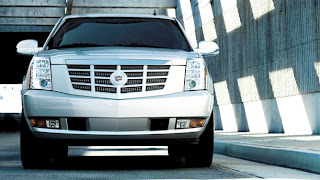
Haye is not alone in having a stolen car recovered and returned to him. Across the nation, a car is stolen every 27 seconds. The most stolen late-model cars include the Cadillac Escalade, Chevrolet Silverado, Dodge Charger and Infiniti G37, while older vehicles that are often stolen include the Honda Accord, Toyota Camry and Dodge Caravan.

Thieves are also routinely stealing high-value components, and in many cases, they will steal the whole vehicle to get the prize they're after. In one widely reported case -- the theft of civil rights campaigner Jesse Jackson's Escalade last year -- it was the Escalade's leather seat covers the thieves were after.

Patrick Clancy, a representative at LoJack, which manufacturers a range of auto-recovery devices, said car owners can expect a recovery rate of 90 percent or more when using his company's theft recovery devices. "LoJack helps police track down the criminals behind vehicle theft, which is often committed as part of a much bigger crime. So, LoJack actually helps get these bad guys off of the streets."

Typically, once a car owner alerts the theft-recovery system that their car is missing, a car's tracking device will be activated and the local police department notified. Often, sensing the chance to net a wider gang of criminals, police units will be mobilized to search for the vehicle. In some instances, vehicles can be recovered in minutes, and having a theft-recovery device installed on your car can help reduce your auto insurance.

Some auto recovery tales border on the unbelievable. An Escalade owner in Dallas found his car was tracked to a storage unit where 13 other stolen GM vehicles were being parted out for profit. The total recovery value of all the cars was about a quarter of a million dollars. Electronic tracking devices also played a part in locating a 2001 Corvette in Southern California that had been stolen for the unbelievable ninth time. In a sad tale, after a Greensboro, N.C., man was found dead and his car missing, police were able to apprehend a murder suspect.

See Lojack's complete list below:

10. Major Chop Shop Busted – Dallas police tracked a 2003 Cadillac Escalade equipped with LoJack and discovered a total of 13 stolen GM vehicles, valued at $234,500.

9. LoJack Tackles Recovery for NFL Player – A Land Rover owned by Tennessee Titans defensive tackle Jovan Haye was stolen from a dealership's service center and recovered at the Nashville International Airport.

8. LoJack System Foils Lamborghini Thief – Miami-Dade police recovered two Lamborghini Gallardos – worth a combined value of $370,000 – which were rented with fraudulent credit cards from an exotic car rental company. Both vehicles were recovered in a little over an hour.

7. VIN Switching Doesn't Fool LoJack – A stolen Dodge Caravan led Rhode Island police to discover a VIN switching theft ring involving more than 10 stolen vehicles.

6. Thieving Tow Truck Driver –Philadelphia police tracked down a stolen BMW equipped with LoJack, taken at the hands of a tow truck driver who later admitted to towing and stealing a full 27 vehicles – all of which had been taken to a junkyard to be crushed for profit!

5. Saving Police Bait Car – LoJack helped Sacramento police recover its stolen Acura Integra bait car, which is used to catch car thieves in the act.

4. Professional Cadillac Thief Thwarted – A stolen Cadillac equipped with LoJack led detectives to a chop shop. The suspect later admitted to stealing and stripping 400 Cadillacs over a three-year period.

3. LoJack Gives Vehicle Nine Lives – A 2001 Corvette was stolen and recovered for the ninth time. In this instance, the vehicle was tracked down in less than an hour.

2. LoJack Makes a "Key" Recovery – A brazen thief broke into a dealership in Washington and stole a 2003 Hummer along with the keys to 60 other vehicles on the lot. Fortunately, the Hummer was tracked down by police in less than two hours. All the keys were found in the recovered vehicle.

1. LoJack Leads Police to Murder Victim's Killer – A stolen pickup led police to discover the identity and arrest an alleged murderer, who killed the vehicle's owner and drove away with the victim's vehicle. Gaston, NC, police picked up the vehicle's signal only 16 minutes after activation about 100 miles away from the crime scene. They later arrested the suspect for first-degree murder and other crimes.

Read more from our partner Motor Trend: Top 10 Celebrity Rides.

Monday, January 10, 2011

Win 2 tickets to the Super Bowl!


We just launched a contest to win 2 tickets to the Super Bowl!

The winner also gets travel and two nights stay at a luxury hotel near the spectacular new Cowboys Stadium!
Entering to win is easy: Visit www.farmers.com

Good luck!!
~ David Lorms

Sunday, January 2, 2011

How do I get insurance without having a car?

Question: I got a DUI a few years ago and have never needed to get my license back.now I'm about to have my first child and really need to get it back if I need to drive somewhere but I do not have a car. But I need insurance to get it back. Any help will be great. Thank you.
Asked by Ryan

Answer: You can purchase a "non owners" auto policy, that will cover you when drving other vehciles. David Lorms
www.davidlormsfarmersinsurance.com

Thursday, December 2, 2010

Accident on private property who is at fault?

Accident on private property who is at fault?

Question: My father had a accident in Houston, Tx when he was just pulling out of burger king drive thru some man was not paying attention and side swiped my father on the drivers side of the car, there is damage to our vehicle and none to his. We have a claim number and everything but now after the information was exchanged he is calling us back saying that he will not pay the damages because it was on private property.... Who is at fault and is there any way that we can take them to court since they drove off and we were unable to file a police report?

Asked by nikyo_kurasaki 6 hours ago

Answer: The fact that the accident happened on private property doesn't denote fault or have anything to do with a liability decision. Most times, police will not come out to a scene of an accident if it happens on private property so "blue forms" should always be filled out after the fact. This form is a filing of the accident with the police, after the fact. You can still do this filing. The problem with not having police come to the scene and document the accident, is that people can change their stories and it ends up being one person's word against another. If this happenes, it could be hard to collect from the other person and Insurance companies will probably side with their own insured. Go ahead and place a claim with the insurance comany of the other party for a decision.
To prevent this situation, always call the police. They will usually ask if someone is hurt and if there is no injury, they will not come to the scene. Be sure to file a blue form report anyway, take lots of pictures of the scene, damages to each vehicle, get the names and contact information from witnesses, and exchange insurance information. If you still can't collect from the other party or their insurance company, you can take them to small claims court. If all else fails, file for repair coverage with your own company and they will try to recover their money plus your deductible, if there is enough evidence to support your case.